The Global Significance and Evolution of Pizza: A White Paper
Executive Summary
Pizza, a dish with humble origins, has evolved into a global culinary phenomenon. Its adaptability, simplicity, and cultural resonance have made it a staple in both casual and formal dining contexts. This white paper explores the history, composition, production, consumption patterns, and economic significance of pizza, highlighting trends, challenges, and opportunities in the contemporary food landscape.
1. Introduction
Pizza is a dish traditionally composed of a flattened bread base, topped with a combination of ingredients such as sauces, cheeses, vegetables, and proteins. While commonly associated with a specific regional style, pizza has diversified into countless variants worldwide. Its versatility allows for a broad spectrum of flavor profiles, dietary adaptations, and preparation methods, making it both a commercial success and a cultural symbol.
2. Historical Context
The precursor to modern pizza dates back centuries, with flatbreads topped with herbs, oils, or other simple ingredients found in ancient civilizations across the Mediterranean. The modern concept—leavened dough with tomato-based sauce and cheese—originated in southern Europe and gained popularity in urban centers. Migration and global trade facilitated its spread, transforming pizza from a regional specialty into a universally recognized dish.
3. Composition and Culinary Science
3.1. Dough
The foundation of pizza, dough, is typically composed of wheat flour, water, yeast, salt, and oil. Dough fermentation contributes to texture, flavor, and digestibility. Variations in flour type, hydration levels, and fermentation time influence the crust’s crispness, chewiness, and structural integrity.
3.2. Sauce
Sauce, often tomato-based, provides acidity, moisture, and a flavor foundation. Spices and herbs are added to enhance aroma and complexity. Alternative bases include pesto, cream-based sauces, or vegetable purées, catering to diverse taste preferences.
3.3. Cheese
Cheese contributes richness, texture, and umami. Traditional selections melt evenly and brown under high heat. Plant-based alternatives are increasingly utilized to meet dietary needs, including lactose intolerance and veganism.
3.4. Toppings
Toppings range from vegetables, meats, and seafood to unconventional ingredients, reflecting cultural and regional influences. Proper topping balance ensures textural contrast and optimal heat distribution during cooking.
4. Production Methods
Pizza preparation varies from artisanal hand-stretched dough baked in wood-fired ovens to mass-produced frozen varieties. Key considerations in production include ingredient quality, cooking temperature, and equipment efficiency. Automation and standardized processes enable high-volume production while maintaining consistency.
5. Consumption Trends and Demographics
Pizza is consumed globally across age groups and socio-economic segments. Urbanization, fast-paced lifestyles, and digital ordering platforms have driven growth in delivery and takeout markets. Dietary trends, including plant-based, gluten-free, and low-calorie options, are reshaping consumer expectations.
6. Economic Impact
The pizza industry contributes significantly to the global economy. Beyond direct sales, it supports employment in food production, distribution, retail, and logistics. Supply chain dynamics, including ingredient sourcing and regional production, influence pricing, profitability, and sustainability.
7. Health Considerations
While pizza can be calorie-dense, nutritional quality varies widely. Innovations in dough formulations, cheese alternatives, and vegetable-rich toppings can improve macronutrient balance. Education on portion control and ingredient transparency is essential for promoting healthier consumption patterns.
8. Sustainability and Future Outlook
Sustainable practices in pizza production include sourcing local ingredients, minimizing packaging waste, and optimizing energy efficiency in cooking processes. Advances in plant-based alternatives and renewable energy adoption present opportunities for environmental impact reduction. The future of pizza lies in balancing convenience, flavor innovation, and ecological responsibility.
9. Conclusion
Pizza exemplifies the convergence of culinary tradition, cultural adaptation, and commercial innovation. Its global popularity reflects a unique combination of accessibility, versatility, and appeal across demographics. By embracing sustainability, nutritional improvements, and technological advancements, the pizza industry can continue to thrive while meeting evolving consumer expectations.
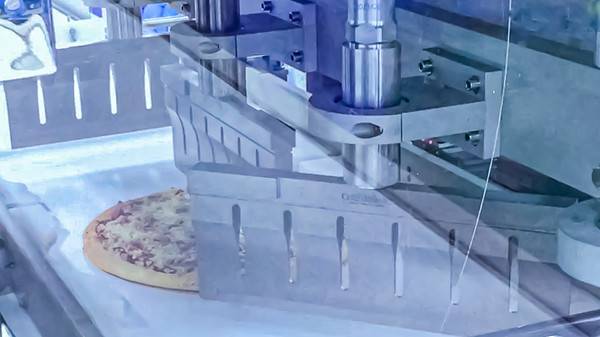
This highly productive ultrasonic pizza cutter not only cuts the long pizza, but also cuts almost all of the long baked foods, such as cutting the long cake into triangular cakes. Ultrasonic cheesecake cutter’s main reason for slicing bakery products is to ensure that the exact size of the cut is minimized and the minimal cost of the waste is achieved, and this equipment will be able to meet the above requirements, which is a combination of high quality ultrasonic cheesecake pizza cutter and precision automated mechanical construction , To provide customers with fast, accurate and efficient automation solutions.

About Cheersonic
Cheersonic manufactures the leading portioning equipment for bakeries producing fresh and frozen desserts. Since 1998 bakers have used Cheersonic machines to cut, slice and portion cheesecake, pie, layer cake, loaves, butter, cheese, pizza, sandwichs, and more. Cheersonic offers ultrasonic cutting solutions that support start-up bakeries and high production commercial facilities alike. Small standalone machines can be used in manual baking facilities and large inline robotic solutions aid in high speed production.
Cheersonic offers many ultrasonic slicing models, both inline and offline applications, with production speeds of 80 to 1,500 cakes or pies per hour.
Cheersonic’ latest offline introductions include ultrasonic cutting with or without divider inserts between each slice. This improves the quality of the cut and makes for a much better product presentation for the customer. In addition, robotic arm improves the speed, efficiency, and accuracy of the cutting process, producing professional looking products every time.
Email: market2@cheersonic.com


评论
发表评论